






SHOP WHAT YOU NEED
Explore the products below to collect everything you need for this project

![LQX MARKER LIGHT BLUE [DIGITAL SWATCH]](http://www.liquitex.com/cdn/shop/files/152883_375x375_crop_center.jpg?v=1773141333)

![LQX MARKER RED [DIGITAL SWATCH]](http://www.liquitex.com/cdn/shop/files/152898_6e891482-b681-405a-b0f1-4c3ceee75228_375x375_crop_center.jpg?v=1773141066)

![LQX MARKER METALLIC GOLD [DIGITAL SWATCH]](http://www.liquitex.com/cdn/shop/files/152860_375x375_crop_center.jpg?v=1773142396)

![LQX MARKER YELLOW [DIGITAL SWATCH]](http://www.liquitex.com/cdn/shop/files/152905_60dbaa0f-7b09-4c19-9199-d133cf895cdb_375x375_crop_center.jpg?v=1773146099)

![LQX MARKER BRIGHT PINK [DIGITAL SWATCH]](http://www.liquitex.com/cdn/shop/files/152893_375x375_crop_center.jpg?v=1773141303)

![LQX MARKER WHITE [DIGITAL SWATCH]](http://www.liquitex.com/cdn/shop/files/152867_558ae1f7-7dc4-46c6-85f4-7e16cc6e2871_375x375_crop_center.jpg?v=1773140784)

![LQX MARKER BLACK [DIGITAL SWATCH]](http://www.liquitex.com/cdn/shop/files/152862_53cfec6d-8e84-41b3-ae19-3737d18c343d_375x375_crop_center.jpg?v=1773141261)


STEP 1
PREP THE SURFACE
Insert the cardboard into the t-shirt to provide a stable surface on which to work, and prevent paint and medium from bleeding through the fabric. Gently stretch and secure the t-shirt at four corners with binder clips to hold the fabric taut against the cardboard underneath.
Determine where your design will be placed on the garment and use small pieces of painter’s tape to define your working area.
Pour a small amount of Liquitex Fabric Medium into a container and use an acrylic brush to apply an even coat over the design. The Medium will initially appear cloudy white but will dry clear. The fabric may darken slightly where the Medium is applied, so plan on drawing over that area.
Allow the medium to dry completely before proceeding to the next step.

STEP 2
PRACTICE YOUR TECHNIQUE
Using a reference image, practice the continuous drawing technique on a piece of paper by sketching out your subject without lifting your pencil from the surface. Remember, the object is to create a loose, free-flowing design instead of a literal reproduction.

STEP 3
APPLY THE DESIGN
Lightly sketch your design onto the area of the shirt where the Fabric Medium was applied to use as a rough guide for your illustration.
Shake the closed Black marker to distribute the paint. Take off the cap and depress the nib 2–3 times to saturate before using.
Beginning with the eyes, let your marker travel naturally over the sketch – allowing lines to cross over themselves, connecting different parts of the image. Work slowly and confidently as the marker moves from one area to the next. The line will weave its own visual path as it explores the image.
At this stage you might want to leave the piece as a pure line drawing. The simplicity of the linear design can be striking on its own.

STEP 4
ADDING COLOR
Choose two or three marker colors that complement your design. Look for interesting, enclosed shapes created by overlapping lines. Fill a few of these spaces with your first color. Continue adding colors throughout the piece until the design feels balanced and visually engaging.
Experiment with combining areas of color or adding other lines within shapes to embellish the overall piece.


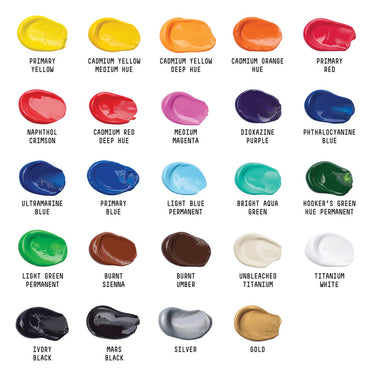
![LQX BASICS 24X22ML PAINT SET 887452028543 [FRONT]](http://www.liquitex.com/cdn/shop/files/80833_375x375_crop_center.jpg?v=1762458732)
![LQX ACRYLIC MARKER SET 6X 2-4MM CLASSICS [CONTENTS] 887452001225](http://www.liquitex.com/cdn/shop/files/68762_375x375_crop_center.jpg?v=1707320720)


![LQX BASICS 6x118ML SET 887452059226 [SET WITH CONTENTS 2]](http://www.liquitex.com/cdn/shop/files/130398_375x375_crop_center.jpg?v=1707324060)
![LQX BASICS 6x118ML SET 887452059226 [FRONT]](http://www.liquitex.com/cdn/shop/files/130396_375x375_crop_center.jpg?v=1762458768)
![LQX MATTE POURING MEDIUM SET [CONTENTS] 887452048695 [NA]](http://www.liquitex.com/cdn/shop/files/96237_375x375_crop_center.jpg?v=1762458531)