






USE CODE: LQXSTORY15 AT CHECKOUT FOR 15% OFF THE COLLECTION
Shop the CollectionMEET THE 2026 COLOR OF THE YEAR: LIGHT BLUE VIOLET
Calm, mellow and just right for the times we live in: meet Light Blue Violet, the Liquitex Color of the Year for 2026. Suspended between sky and shadow, this is a cool-toned and contemplative shade with huge versatility. It’s made from a mix of pigments - ultramarine blue (PB29) and titanium white (PW6), or these two with an added dash of dioxazine violet (PV23RS). Light Blue Violet is a highly opaque vibrant mid blue with red undertones.
WHY IS IT THE COLOR OF THE YEAR?
Take a breath, look up and then read on. Light Blue Violet is a calming tone; it’s a color for those who see potential in the pause. Our lives have never been so full of noise, news and drama. Light Blue Violet is a balm. It soothes the frayed edges, muffles the chatter, creates space to breath and offers hope. It helps us reflect and step away from anxious thinking, lets us look inside, look to the horizon and dream. It has depth and versatility. Part serene, part electric, it’s all expression and brings a new era of good energy.
LIGHT BLUE VIOLET ORIGINS
A pastelized purple blue, Light Blue Violet can also be described as a periwinkle or muted blue lavender. Also known as sorcerer’s violet or fairy’s paintbrush, dogbane or creeping myrtle, did you know that the periwinkle plant is called the flower of death in Italy, due to the tradition for using it in commemorative wreaths?
The word violet derives from Old French, violet or violete. It was first used in written English in the mid-14th century in The Buke of John Maundeuill, which reports “Men fynd dyamaundz of violet colour” (Men find diamonds of violet color).
Violet is part of the color spectrum in white light, along with red, orange, yellow, green, blue and indigo. In normal life all of the colors are mixed up but can be seen separately when passed through an optical prism. A prism is a transparent optical element, usually made of glass, gemstone or acrylic, with flat, polished surfaces that are designed to refract light. Violet light, in physics, has a short wavelength of 380–450 nanometers and this makes it deviate clearly and become easily visible when passing through a prism.
IN THE ART WORLD
This color was loved by the Impressionists. Its versatility lent itself to experimentation and it helped shake up the way artists worked. Renoir uses light blue violet shades to create his Portrait of Madame Monet (1872–74), while in turn Monet drew on its nuances to create misty blue/purple evening light over water in his Impression, Soleil Levant (1872). His Water Lilies series features it boldly, while Pissarro uses its cooler side for his winter landscapes. See it defining skin tones in shadow, expertly done by Degar, particularly in his female character studies Portrait of Giulia Bellelli (Sketch) in 1860 and Young Girl Braiding Her Hair (1894).
HOW TO USE
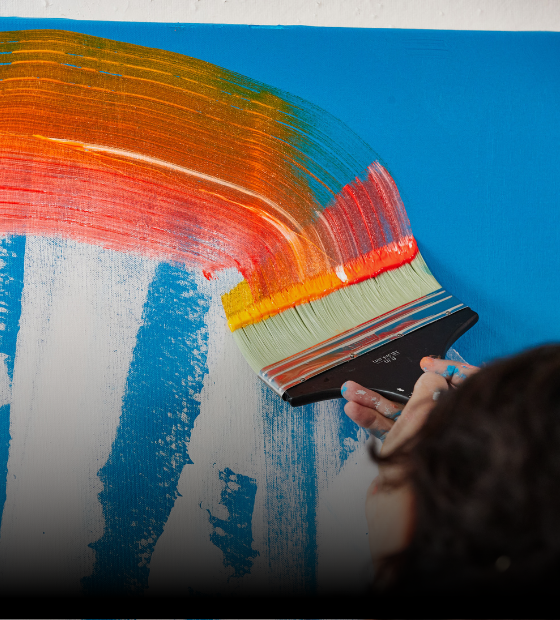
Ultra versatile, Light Blue Violet is ready for a spectrum of practical uses and techniques. Perfect for color washes and glazing when mixed with a medium, it gives sheer and dreamy effects that love to be layered. It’s bold and solid when you’re color blocking: fully opaque and built to cover immediately and effectively with one coat. Light Blue Violet pops and will bring fresh energy to any creative project.
Try it with brights, or muted shades… it works in all kinds of contexts and palettes. Pair with beiges and mushrooms to make it jump out, mustard, tans and butter yellows for impact and as a foil for corals and red shades.
Light Blue Violet is handy to highlight and add weight to ocean and cloud scapes. Reach for it when you’re creating shadows. Ideal for evening sunsets and dusk light, you can also mix it with white for a bold pastel with serious depth. Love silk screen printing or textile painting? This is a great color choice on denim and all kinds of fabric backdrops, giving you a clean, strong result every time.
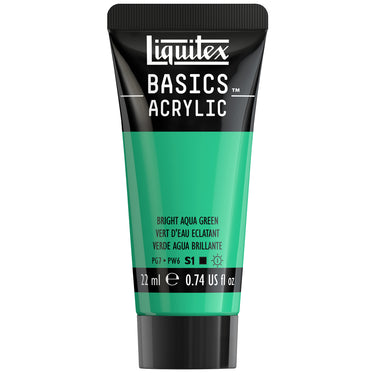
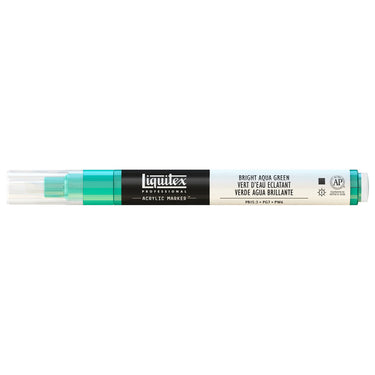
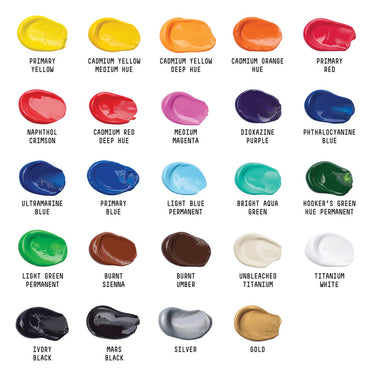
Find Light Blue Violet in Liquitex Heavy Body, Soft Body, Acrylic Marker, Basics Acrylic Color and Basics Acrylic Fluid Color.
![LQX BASICS ACRYLIC BRIGHT AQUA GREEN [SWATCH]](http://www.liquitex.com/cdn/shop/files/140811_4794bd56-15f4-4352-a8be-00beba0b7adb_375x375_crop_center.jpg?v=1762458504)
![LQX ACRYLIC MARKER 660 BRIGHT AQUA GREEN [WEBSITE SWATCH]](http://www.liquitex.com/cdn/shop/files/71594_375x375_crop_center.jpg?v=1762458453)


![LQX BASICS FLUID ACRYLIC 118ML BRIGHT AQUA GREEN 887452056034 [NA]](http://www.liquitex.com/cdn/shop/files/112707_375x375_crop_center.jpg?v=1763127794)






![LQX BASICS 24X22ML PAINT SET 887452028543 [FRONT]](http://www.liquitex.com/cdn/shop/files/80833_375x375_crop_center.jpg?v=1762458732)
![LQX ACRYLIC MARKER SET 6X 2-4MM CLASSICS [CONTENTS] 887452001225](http://www.liquitex.com/cdn/shop/files/68762_375x375_crop_center.jpg?v=1707320720)


![LQX BASICS 6x118ML SET 887452059226 [SET WITH CONTENTS 2]](http://www.liquitex.com/cdn/shop/files/130398_375x375_crop_center.jpg?v=1707324060)
![LQX BASICS 6x118ML SET 887452059226 [FRONT]](http://www.liquitex.com/cdn/shop/files/130396_375x375_crop_center.jpg?v=1762458768)