



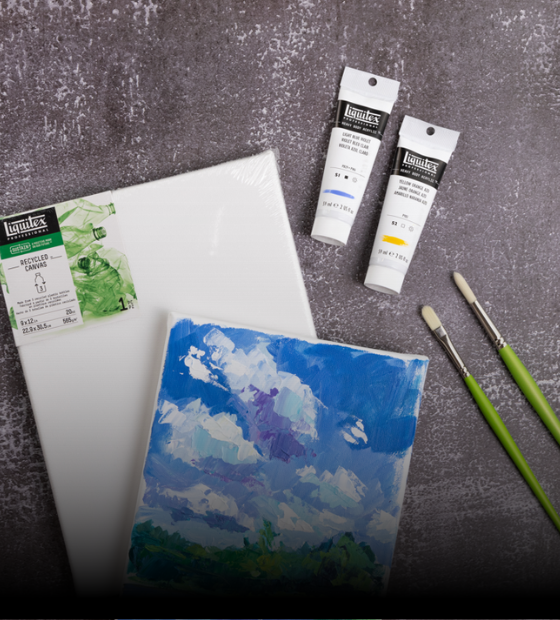

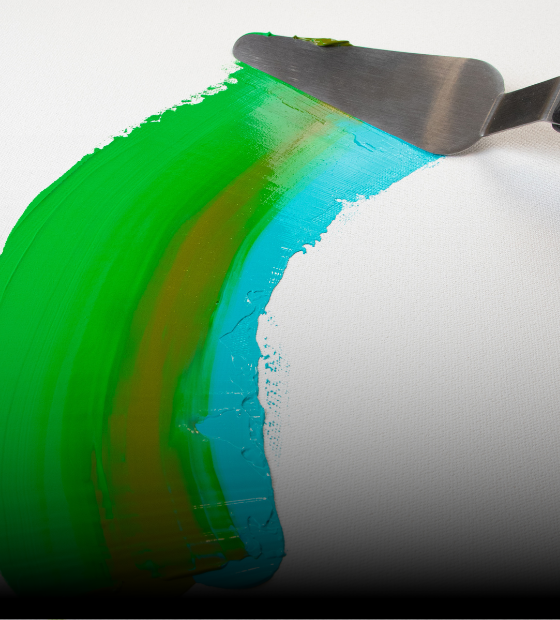






Sheer. Soft. Subtle. Join us as we go deeper into one of our palette favorites: Transparent Mixing White. This highly translucent white has subtle tinting strength and gives you infinite options. It’s ideal for soft tints, glazes, boosting transparency and toning down colors without overpowering.
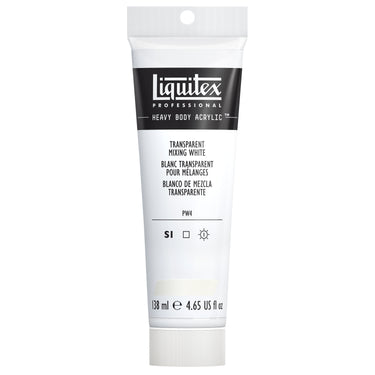
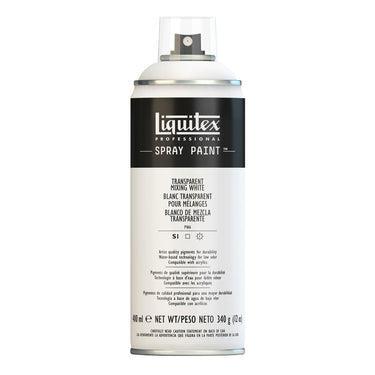
What’s in it? Our innovation chemists use two different pigments to make Liquitex Transparent Mixing White. Look on the labels and you’ll find which we use where: PW4 aka zinc white is the core of Heavy Body, Soft Body and Basics Fluid, while Bio-Based Heavy Acrylic, Spray Paint and Basics are based on PW6 titanium dioxide. Both are engineered to give comparable whites, waiting to be unleashed to tone down other colors, with excellent transparency and lightfastness.
ORIGIN
The most common pigment in transparent mixing white is zinc oxide – found in Liquitex Heavy Body, Soft Body and Basics Fluid. This was first reported as an alternative to white lead in 1782 by Guyton de Morveau at France’s L'Académie de Dijon. Originally from China and the East Indies, metallic zinc became more common when zinc ore was found in Europe and commercial extraction industry began. By 1794, English colormaker John Atkinson obtained a patent for the manufacture of zinc oxide and it became widely used as a watercolor. A denser form named ‘Chinese White’ was marketed in 1834 by Winsor & Newton of London and the name is still commonly used for zinc white watercolors today.
It took longer for zinc white to become widely used in the world of oil paints. LeClaire in Paris first created a stable formula in 1844 by grinding the zinc oxide with poppy oil that had been made fast drying by boiling it with pyrolusite. A year later, he was producing zinc oil oil paint on a large scale; soon it was being manufactured throughout Europe.
Zinc oxide has electrical, photoelectrical, and catalytic properties and is now used in all kinds of commercial manufacturing… from TVs to rubber tires, plastics and pharmaceuticals to printing inks and photocopiers, cosmetics to paint!
IN THE ART WORLD
Zinc white is loved by artists for lots of reasons: it’s non-toxic and more economical than its historical rival, white lead. It also keeps its color clarity when in contact with sulphur-bearing air and pigments, unlike white lead. And it makes great tints with other colors. Tints made with zinc white show every nuance of a color's undertones to a degree greater than tints made with other whites.
Zinc white was on the palette of many leading artists through history. From Norman Rockwell who mixed varnish with zinc white, to Van Gogh, who used used both zinc white and lead white paints simultaneously in the same painting. Take a look at his Wheat Field with Cypresses (1889) for an example of how to use zinc white for skyscapes.
TRANSPARENT MIXING WHITE VS TITANIUM WHITE
HOW TO USE
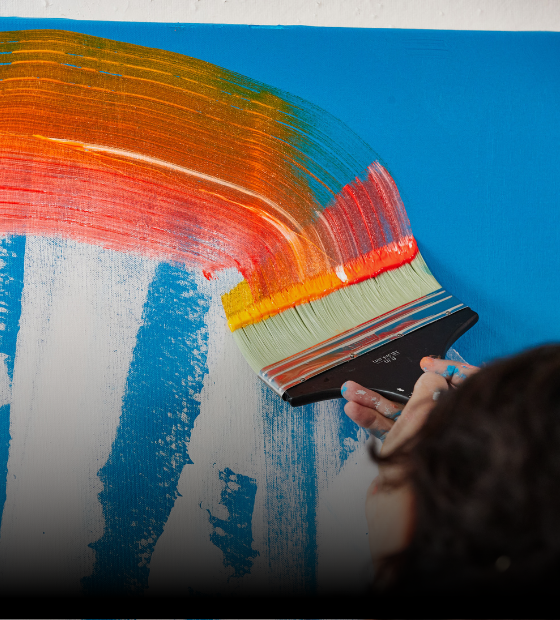
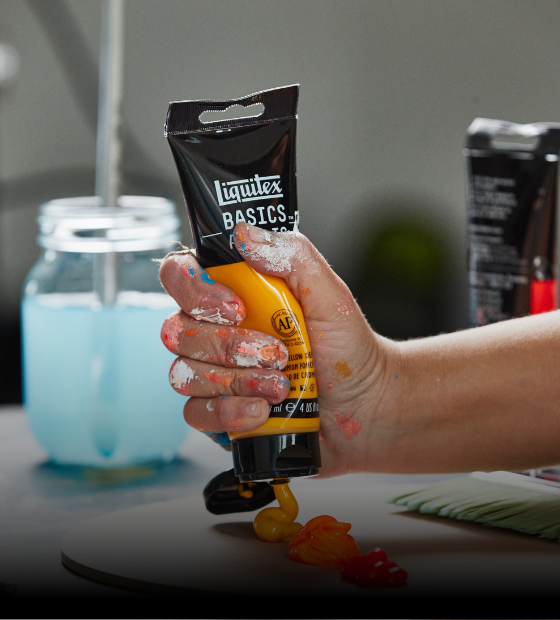
Squeeze out some Transparent Mixing White and set it to work. Mix it with other colors to increase their transparency without dialing down pigment punch. Ideal for glazing, you can achieve glowing sheer effects on all kinds of surface – from transparent glass to canvas – and use in layers to build depth. Essentially, it’s your go-to white when you want a subtle effect or soft tint, lightening without dominating. Transparent Mixing White has a tenth of the strength of Titanium White. Its weakness makes it perfect for subtle lightening, so choose it when you want softer – less pastel – effects.
When mixing with Basics colors (which by nature have less pigment), you may want to reach for Transparent Mixing White so you don’t overpower the pigment too much. Using Transparent Mixing White ensures that the vibrancy of the colors it’s mixed with is preserved.
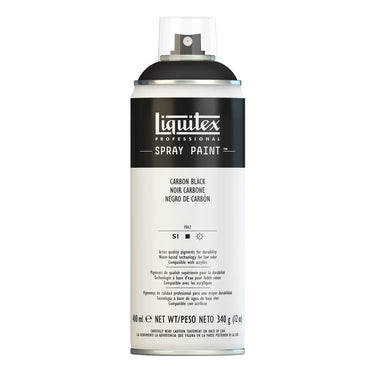
Available in Liquitex Pro Heavy Body, Bio-Based Heavy Acrylic, Soft Body, Spray Paint, Basics Acrylic and Basics Acrylic Fluid.

![LQX BASICS ACRYLIC TRANSPARENT MIXING WHITE [SWATCH]](http://www.liquitex.com/cdn/shop/files/140873_375x375_crop_center.jpg?v=1762458737)

![LQX BASICS FLUID ACRYLIC 118ML TRANSPARENT MIXING WHITE 887452056126 [NA]](http://www.liquitex.com/cdn/shop/files/112751_375x375_crop_center.jpg?v=1763127792)


![LQX SPRAY PAINT TRANSPARENT MIXING WHITE [WEBSITE SWATCH]](http://www.liquitex.com/cdn/shop/files/72432_375x375_crop_center.jpg?v=1762458435)
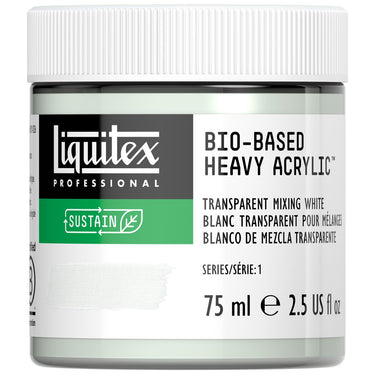
![LQX BIO-BASED HEAVY ACRYLIC TRANSPARENT MIXING WHITE [SWATCH]](http://www.liquitex.com/cdn/shop/files/135789_375x375_crop_center.jpg?v=1762459050)



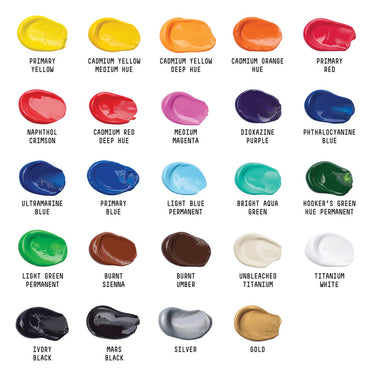
![LQX BASICS 24X22ML PAINT SET 887452028543 [FRONT]](http://www.liquitex.com/cdn/shop/files/80833_375x375_crop_center.jpg?v=1762458732)
![LQX ACRYLIC MARKER SET 6X 2-4MM CLASSICS [CONTENTS] 887452001225](http://www.liquitex.com/cdn/shop/files/68762_375x375_crop_center.jpg?v=1707320720)


![LQX BASICS 6x118ML SET 887452059226 [SET WITH CONTENTS 2]](http://www.liquitex.com/cdn/shop/files/130398_375x375_crop_center.jpg?v=1707324060)
![LQX BASICS 6x118ML SET 887452059226 [FRONT]](http://www.liquitex.com/cdn/shop/files/130396_375x375_crop_center.jpg?v=1762458768)